Frost-Tolerant vs Tender Crops: Planning Your Planting Order
A New Hampshire garden can be ready to work before the weather is ready for every crop. Planting too early may expose tender seedlings to cold nights, while waiting too long can waste the cool conditions some vegetables prefer. The solution is to sort crops by cold tolerance, then use soil warmth, local frost risk, and each plant’s growth stage to decide what goes in first.
What Frost Tolerance Means for Garden Planning
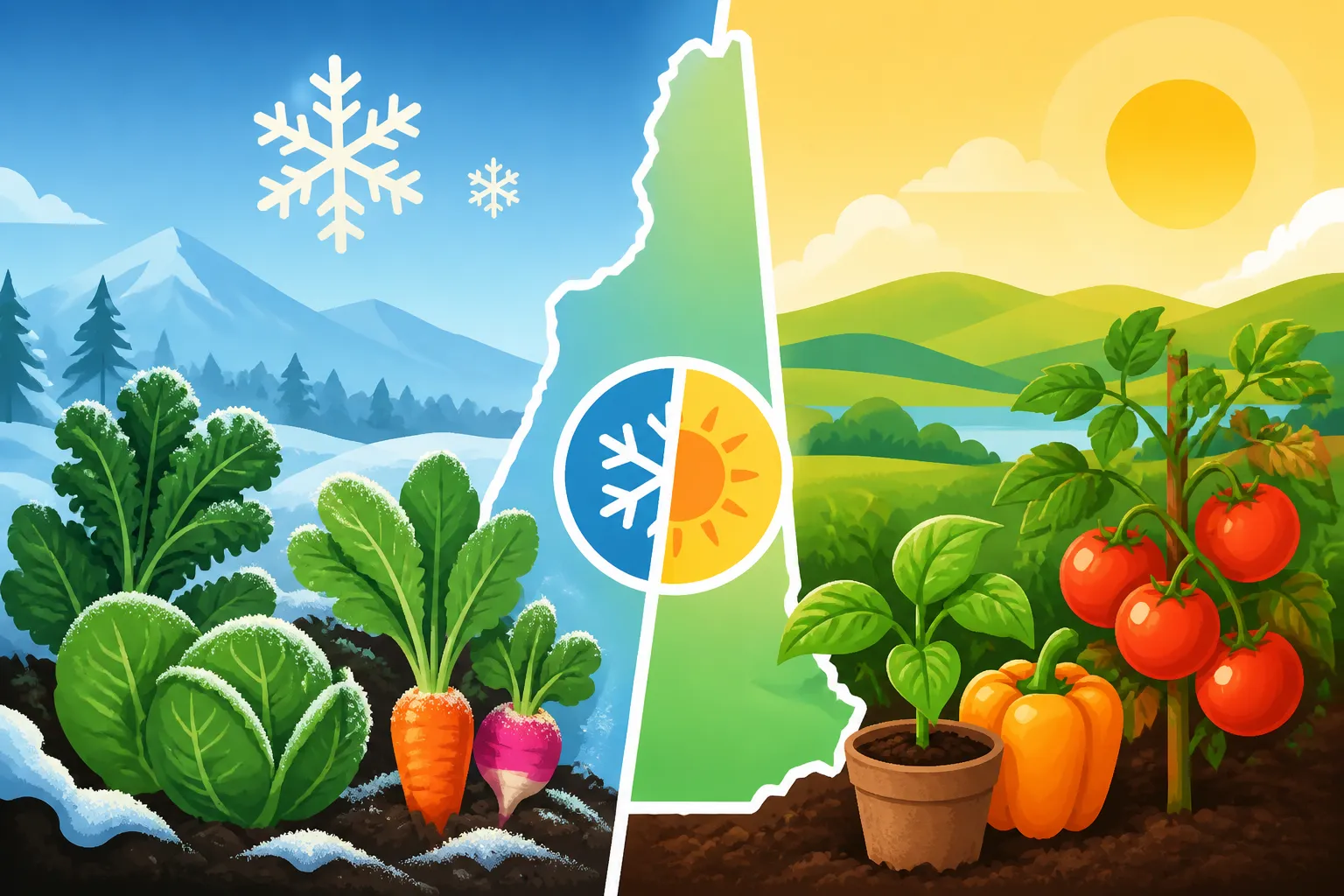
“Frost-tolerant” is a useful planning category, not a guarantee that a crop will survive every cold night. A light frost may leave one established plant largely unharmed while damaging a tender seedling nearby. Cold injury depends on several factors: how low the temperature falls, how long it stays low, whether the plant is acclimated, and how exposed the garden is.
Frost tolerance also changes with the plant’s stage of growth. Seeds of many cool-season crops can be sown in cool soil, but newly emerged seedlings may be more vulnerable than mature plants. Transplants moved from indoors need time to adjust outdoors. A plant that has been growing in a protected, warm room is not automatically prepared for a chilly, windy night.
Frost is not the same as cold soil
A crop may cope with a brief cold night and still struggle when planted into cold, wet soil. Seeds may germinate slowly, rot, or sit in place for a long time. Roots in chilly ground absorb water and nutrients less effectively, and a transplant may stall even if frost does not visibly damage its leaves.
That is why a planting decision should consider both air and soil conditions. Check the forecast for overnight lows, but also check whether the bed is workable and whether its soil has begun to warm. A raised bed or sunny, sheltered patch may warm earlier than a low, shaded bed, though it can also dry out faster.
For practical checks, see New Hampshire Frost Dates and Planting Calendar Guide and Measuring Morning Soil Temperature Before Sowing Spring Crops. Frost-date averages help with planning, but they are not promises for a particular garden or year. Frost dates are probabilities, and nearby locations can experience different conditions.
“Cool-season” does not mean frost-proof
Cool-season crops are generally suited to cooler growing conditions and can often be planted earlier than warm-season crops. Some tolerate light frost, especially once established. Others handle cool weather but can be injured by a freeze or by repeated cold exposure.
Warm-season crops are more sensitive to cold. A chilly night can slow them down, and frost can damage or kill exposed foliage. They usually need warmer soil and more settled overnight conditions before planting outside.
The terms describe broad preferences, not identical rules for every crop. For example, a crop can be considered cool-season because it grows well in spring, while its leaves remain vulnerable to a hard freeze. Likewise, a tender crop might survive a cool spell under protection but still fail to grow well in cold soil.
Frost tolerance differs from winter hardiness
A perennial plant’s ability to survive winter is not the same as a vegetable’s ability to tolerate spring frost. Winter hardiness describes how a plant survives cold-season conditions, while garden frost tolerance is about the crop’s response to short cold events during active growth.
Do not assume that a hardy perennial, a seed, or a mature crop will respond to frost in the same way as a young transplant. The planting order below is a practical starting point; the seed packet, transplant label, and local conditions still matter.
Which Crops Usually Go in First
The first planting group is made up of crops that can grow in cool conditions and generally tolerate some spring cold. The next group includes crops that prefer warmer soil or are easily damaged by frost. A few crops fall between those categories: they may tolerate cool weather but need protection at a vulnerable stage.
| Planting group | Common examples | Main reason to plant in this order | Important caution |
|---|---|---|---|
| Early cool-season crops | Peas, spinach, lettuce, radishes, and some other leafy greens | They grow in cool weather and can often be sown before tender crops | Seedlings still need protection from severe or prolonged cold |
| Cool-season roots and alliums | Carrots, beets, onions, and turnips | They can be started while the garden is still cool | Germination and early growth may be slow in cold or wet soil |
| Cool-season transplants | Cabbage, broccoli, kale, and related crops | Established transplants can make use of spring conditions | Harden them off and protect them when a damaging freeze is expected |
| Frost-sensitive but not strictly warm-season crops | Potatoes and some herbs | They may be planted before the tenderest crops, depending on conditions | Emerging shoots can be damaged by frost |
| Warm-season crops | Tomatoes, peppers, eggplant, beans, corn, cucumbers, and squash | They need warmer soil and are vulnerable to frost | Cold soil can delay growth even after frost risk declines |
| Very tender warm-season plants | Basil and other heat-loving crops | They do best after nights and soil have warmed | A late cold spell can set them back or kill them |
This table is a broad sorting tool, not a fixed calendar. Crop type, variety, seedling size, bed exposure, and protection all affect the decision. For specific cold-hardy choices and limits, see Which Cold-Hardy Vegetables Can Brave Early Spring Light Frosts?.
Sow the hardier crops first
Peas, spinach, lettuce, radishes, and many other cool-season crops are often suitable for early sowing when the soil can be worked. Some are direct-sown; others may be planted as transplants. Their advantage is that they do not need the warm conditions that tomatoes, peppers, beans, and squash require.
Still, “early” does not mean planting into saturated or unworkable ground. Working wet soil can compact it, and seeds sown into very cold conditions may take a long time to emerge. If the ground sticks to tools or clumps heavily when handled, waiting for it to dry can be better than trying to gain a few days.
Cool-season greens can also be sensitive to changes later in the season. As temperatures rise and days lengthen, some crops may bolt, or send up a flower stalk, rather than continue producing tender leaves. Early planting helps use the cool window, but succession sowing can provide a later harvest if spring crops mature quickly. See Midsummer Succession Sowing Windows for New Hampshire Gardens for the same idea applied to later plantings.
Treat roots and alliums as their own group
Carrots, beets, radishes, and turnips are commonly grown as cool-season root crops. Onions are often started early as well. These crops do not all respond identically to cold, and their seeds may germinate slowly if soil conditions are poor.
Root crops are usually best sown directly where they will grow. Transplanting can disturb roots, especially for crops that form a straight taproot. Keep the seedbed evenly moist while seeds establish, but avoid keeping it waterlogged. Fine seeds may need a gentle watering method so they are not washed out of place.
Onions can be grown from seed, sets, or transplants, depending on what is available and the gardener’s approach. Each has different handling and timing needs. Use the directions supplied with the seed or planting material rather than assuming all onions should be planted in the same way.
Give warm-season crops a separate go-ahead
Tomatoes, peppers, eggplant, cucumbers, squash, beans, and corn should not be moved outdoors simply because early crops are already growing. These plants are more vulnerable to frost, and their roots may struggle in cold ground. They benefit from waiting until the risk of frost has eased and the soil has warmed.
The exact point to plant depends on local conditions. A garden in a sheltered, sun-facing area may be ready before a cold hollow nearby. A forecast showing mild weather for several days does not remove the risk of a sudden cold night, so check local forecasts as planting approaches.
For a crop-by-crop warm-season decision, use Timing Warm-Season Garden Transplants After the Final Freeze. To compare the benefits and drawbacks of starting seed indoors versus sowing outside, see Direct-Sowing vs Starting Indoors for New Hampshire Gardens.
Plan the Planting Order by Conditions, Not Just by Date
A planting calendar is most useful when it gives you a sequence and decision points rather than a single date to follow. In New Hampshire, elevation, exposure, distance from water, and terrain can make spring conditions vary from one garden to another. Even gardens in the same town may warm at different speeds.
Use a sequence such as the one below, then adjust it to your bed and the current weather.
1. Get the bed ready without rushing wet soil
Before sowing, remove weeds and prepare only the soil that is workable. If a bed is too wet, digging and walking over it can damage its structure. A dry surface does not always mean the root zone has drained, so check below the surface too.
If the bed is new or has a history of poor growth, avoid guessing at amendments. Soil testing can help identify whether pH or nutrient levels need attention. Do not add fertilizer, lime, or other amendments automatically just because planting season has begun.
2. Start with crops suited to cool conditions
Once the ground is workable, sow early cool-season crops according to their seed instructions. Peas, spinach, lettuce, and radishes are common first choices. Some gardeners also plant cool-season transplants, provided they have been hardened off and can be protected if the forecast turns harsh.
For crops that are usually sown directly, use the seed packet’s guidance for depth and spacing. Keep rows easy to identify; young seedlings can be difficult to distinguish from weeds. If the soil dries quickly, check moisture at root depth rather than relying only on the appearance of the surface. How to Check Soil Moisture at the Root Zone Before Watering explains why the top layer can be misleading.
3. Add crops with vulnerable shoots carefully
Some crops are planted while frost is still possible, but the part above ground may be vulnerable. Potatoes are a useful example: the crop may be established in the ground before all frost risk is gone, but emerging shoots can be harmed by a freeze. If shoots appear during a cold spell, a temporary cover can provide protection when used correctly.
A cover is not a substitute for choosing the right planting window. It also needs to be removed or adjusted when conditions warm, because a covered bed can overheat. Make sure any protective material is supported so it does not crush plants, and check the forecast and the plants rather than leaving protection in place by habit.
4. Harden off indoor-grown plants
Seedlings started indoors need a gradual transition to outdoor conditions. Indoor plants have not experienced normal sunlight, wind, and temperature variation. Moving them straight from a warm room to a full day outdoors can cause leaf scorch, wilting, or general stress even if no frost occurs.
Begin the transition when weather is suitable, starting with limited exposure and increasing it gradually. Avoid exposing tender plants to a cold or windy night during this process. Keep the growing medium from drying out, but do not leave seedlings standing in water.
A good hardening-off routine prepares plants for outdoor conditions; it does not make frost-sensitive crops frost-proof. For a step-by-step approach, see Starting Seeds Indoors: Hardening Off Seedlings Step-by-Step.
5. Wait for warmer soil and lower frost risk before planting tender crops
Warm-season crops generally go out after the early cool-season plantings, when soil and overnight conditions are more favorable. A few warm afternoons do not necessarily mean the bed has warmed through. Soil in a shaded or low-lying area can remain cold even when the air feels pleasant.
Before transplanting, check the current forecast, the local pattern, and the conditions in the bed. Tender seedlings should be healthy and adequately hardened off. If a cold spell appears likely, delaying planting can be less costly than setting out plants that stall or suffer damage.
6. Keep a second planting window in mind
Planting order is not only about spring. New Hampshire’s growing season is limited, and crops planted later need enough time to mature before autumn cold. If a spring planting is delayed, choose crops and planting methods with the remaining season in mind. For fall crops, count backward from expected frost conditions and check the crop’s days to maturity.
See Counting Days to Maturity Before First Frost for Fall Vegetables and New Hampshire Growing Season Length and Freeze Risk Guide when planning late sowings. The aim is not to force every crop into the garden, but to give each planting a realistic chance to produce.
A Practical Spring Sequence for New Hampshire
The sequence below is a flexible framework. It does not assign a planting date to every town or garden. Use it alongside local frost information and the actual conditions of the bed.
| Spring stage | What to do | What to check before proceeding |
|---|---|---|
| Soil is still cold or wet | Prepare tools and beds only when soil is workable; plan seed starting and crop placement | Soil condition, drainage, and whether walking or digging will compact the bed |
| Early cool conditions | Sow suitable cool-season crops such as peas, spinach, lettuce, and radishes | Seed directions, soil moisture, and forecast lows |
| Cool-season growth is underway | Add additional cool-season sowings or transplants; protect vulnerable young plants as needed | Whether plants are hardened off and whether a cold snap is forecast |
| Soil is warming and frost risk is easing | Prepare for warm-season transplants, but do not rush them outdoors | Soil warmth, the local forecast, and the garden’s exposure |
| Conditions are reliably warmer | Plant tender crops such as tomatoes, peppers, beans, cucumbers, and squash | Crop instructions, transplant condition, and remaining season length |
| Summer planting continues | Sow successive crops where conditions and remaining season permit | Days to maturity, heat sensitivity, moisture, and first-freeze risk |
The table’s stages may overlap. A gardener might be transplanting cabbage while sowing another row of radishes and waiting to plant tomatoes. Treat each crop as a separate decision instead of declaring the whole garden “open” or “not ready.”
Use frost dates as a planning reference
Average frost dates provide a useful way to estimate when risk tends to decrease or increase. They are not guarantees. A date with a stated probability means there remains a chance of frost on either side of it, and a garden can differ from the weather station used for the estimate.
When using a frost table, look for the station or area represented and understand the probability attached to the date. Do not treat one station’s average as a precise forecast for every yard. For guidance on station choice and local differences, see Finding Your Nearest NOAA Frost Station in New Hampshire and Comparing NOAA Airport Frost Stations from Berlin to Concord.
A calendar can tell you when to pay attention; the forecast helps with short-term decisions. Check a forecast close to planting, especially before setting out tender transplants. If the risk is unclear, waiting or using temporary protection may be more sensible than assuming the average date has eliminated cold danger.
Use soil warmth as a separate check
A warm afternoon can be misleading. The soil in the upper part of a raised bed may warm quickly, while deeper soil remains cool. Ground shaded by trees, buildings, or a north-facing slope can lag behind a sunny bed. Moisture also affects how soil warms and how easily it can be worked.
If you measure soil temperature, take readings in the part of the bed where seeds or roots will be, and use a consistent method. Readings taken at different depths or times of day are not directly comparable. Follow crop-specific guidance rather than relying on a single temperature number that may not suit every seed.
Make room for two kinds of planting
An effective garden often contains both early and late planting windows. Cool-season crops can use spring conditions, while warm-season crops take advantage of warmer weather later. Some beds can transition from one crop to another as the first harvest ends.
Plan that transition before planting. Avoid sowing or transplanting every crop in the same bed at once if you expect to use the space again. Note how long each crop is likely to occupy the bed and whether the next crop can fit into the remaining season. Keeping a simple garden record of sowing dates, emergence, and harvest results can improve the next year’s plan without pretending that the weather will repeat exactly.
Transplants, Seedlings, and Cold-Night Protection
Planting order is only one part of success. How you prepare a plant and respond to a cold forecast can determine whether it establishes well.
Direct-sow when roots should not be disturbed
Many root crops are best sown directly where they will mature. Peas, beans, and some other crops are also commonly direct-sown, though the suitable timing depends on the crop and conditions. Direct sowing avoids transplant shock, but seeds still need a suitable seedbed and enough warmth and moisture to germinate.
For early sowing, do not assume that a seed planted first will necessarily emerge first. Cold soil can slow germination, and heavy rain may crust or wash a seedbed. Label rows and keep the surface from drying completely while seeds establish. If you are uncertain whether to sow outside or start a crop indoors, compare the crop’s root sensitivity, available indoor space, and the time remaining before the desired harvest.
Transplant only plants ready for the move
A transplant should be healthy enough to handle outdoor conditions. Very small, weak seedlings can be more vulnerable than well-rooted plants, while overgrown seedlings may struggle after being moved. Check the plant’s growth and root condition, and follow crop-specific advice for spacing and planting depth.
Hardening off matters even for plants that will ultimately grow in full sun. The change from sheltered indoor light to direct outdoor sun can be abrupt. Wind can also dry leaves quickly. Give seedlings a gradual transition, and avoid making the final move just before a forecast cold, windy, or unusually hot period.
Use covers as a backup, not a planting strategy
Row covers, cloches, and other temporary barriers can reduce exposure to cold, depending on the material, how they are installed, and the weather. They are most useful as part of a plan: know which plants need protection, check the forecast, and make sure the cover is secure and not damaging foliage.
Protection has limits. A cover may not prevent injury during a severe or prolonged freeze. It can also trap excess heat during sunny weather, so monitor plants and adjust the covering. If using buckets or blankets for a short cold event, make sure the material does not rest heavily on tender plants and remove or ventilate it when conditions warrant. More detailed options are discussed in Covering Seedlings with Buckets and Blankets on Cold Nights.
A cover does not warm cold soil enough to make every crop ready. It may protect leaves while roots remain in an unsuitable environment. That is one reason it is often better to wait with warm-season crops than to depend on repeated emergency protection.
Assess damage before removing a plant
After a cold night, a plant may look wilted, darkened, or limp. Some damage may become clearer only after conditions warm. Do not assume a plant is dead based solely on its first appearance. Give it time to show whether new growth is possible, while removing only tissue that is clearly damaged or decaying.
If the plant is badly injured, consider whether it is worth replacing and whether enough growing time remains. Keep a note of the crop, its stage, and the conditions that caused the damage. That information can help adjust planting order next season.
Why One New Hampshire Garden Can Be Ready Before Another
A statewide planting calendar cannot account for every backyard. Geography and garden design affect frost exposure and soil warming, sometimes over short distances.
Elevation and terrain matter
Cold air can settle in low areas, making a hollow more frost-prone than a nearby slope. A hilltop may drain cold air differently but face stronger wind. A garden on a slope may warm sooner or later depending on its direction, shade, and exposure.
A weather station in a nearby town can be useful, but it may not reflect a garden tucked into a sheltered valley or exposed on a ridge. Compare local observations with the station’s location and the conditions in your own yard. Backyard Microclimates: Why Nearby Weather Stations Differ explains why nearby readings can diverge.
Sun, wind, and nearby surfaces change the picture
A sunny, sheltered bed may warm earlier than one shaded by a building or trees. Walls and paving can affect local warmth, but they can also create uneven conditions and dry the soil. Wind exposure can increase stress on transplants and dry leaves, while a sheltered spot may hold cold air if it is enclosed and low.
Observe where frost lingers in the morning, which beds dry first, and where soil becomes workable sooner. These patterns are more useful than assuming the whole property shares one planting date. If different beds have different exposures, plan crops accordingly rather than moving everything into the first bed that feels warm.
Raised beds and containers behave differently
Raised beds often drain well and may warm sooner than in-ground soil, but this depends on their size, construction, location, and moisture. They can also dry faster, so seedlings may need closer moisture checks. A raised bed is not automatically frost-safe.
Containers can be moved or sheltered, which gives them flexibility. However, potting mix can cool quickly, and roots in containers have less insulation than roots in the ground. Outdoor planters may need protection during cold spells even when nearby garden beds are fine. Use the container’s location and material, not just the crop label, to decide when to move a plant outside.
Keep a local record
A simple record can turn broad recommendations into a more useful personal calendar. Note when the soil became workable, when early crops emerged, where frost lingered, and whether warm-season plants established quickly or stalled. Include the bed location, since a sunny raised bed and a low in-ground patch may behave differently.
The goal is not to find a perfect date that never changes. It is to recognize a pattern and then confirm conditions each season. Combine your observations with local forecasts and frost information, and be prepared to move a planting earlier or later as the season unfolds.
Common Planting-Order Mistakes and Better Adjustments
Even a sensible calendar can go wrong when a gardener treats all crops alike or assumes a single warm spell signals a lasting change.
Planting all crops on one convenient weekend
It is tempting to prepare the whole garden and plant everything at once. That may work for a mix of crops only if conditions suit all of them, which is uncommon in a cool spring. Tender crops may go out too early, while cool-season crops may be held back unnecessarily.
Better adjustment: divide planting into groups. Sow the crops suited to cool conditions first, then schedule a later check for warm-season plants. The garden can be productive before it is ready for tomatoes or squash.
Treating an average frost date as a guarantee
An average is a planning aid, not a promise. A cold night can still occur after a typical frost date, and a nearby weather station may not represent a garden’s terrain or exposure.
Better adjustment: use the date to frame your planning, then monitor short-range forecasts and local conditions. For tender transplants, give yourself flexibility rather than relying on one calendar entry.
Confusing crop category with the cold tolerance of every stage
A cool-season crop may still be vulnerable as a small seedling, and a crop planted in cool weather may not thrive in cold soil. A tender crop might tolerate a brief cool spell under cover but still be set back.
Better adjustment: consider the crop, its growth stage, the soil, and the expected duration of cold. Seed packets and transplant instructions can add crop-specific information that broad categories cannot provide.
Moving seedlings outdoors without hardening them off
Indoor seedlings experience less wind and less intense light than outdoor plants. A sudden move can stress them even in mild weather. This problem can be mistaken for cold injury or poor watering.
Better adjustment: acclimate seedlings gradually. Increase outdoor exposure in steps and avoid a final move immediately before a cold or windy night.
Overusing covers and then forgetting them
A cover used during a cold night can become a heat trap in sunshine. Plants may overheat or become stressed if protection is left in place without monitoring.
Better adjustment: check covered plants and the forecast regularly. Use protection only when needed, secure it appropriately, and ventilate or remove it when temperatures rise.
Ignoring soil moisture and drainage
Cold, wet soil can delay establishment, while a warm raised bed can dry out quickly. Watering by surface appearance alone can lead to either dry roots or waterlogged soil.
Better adjustment: check moisture below the surface, especially for newly sown seeds and transplants. Water gently enough not to displace seed, and avoid working soil while it is saturated.
Planting a long-season crop too late without changing the plan
Waiting for safer conditions is often sensible, but it can shorten the time available for a crop to mature. This matters especially for late plantings and crops with a longer maturation period.
Better adjustment: check the days to maturity and the remaining season before planting. If the window is tight, consider a shorter-season crop or a different planting rather than hoping a late crop will catch up. A fall plan should be based on local freeze expectations as well as the crop’s stated maturity time.
Frequently Asked Questions
Can frost-tolerant vegetables be planted before the last spring frost?
Some cool-season crops can be sown or transplanted while frost remains possible, but tolerance varies by crop and growth stage. Check the forecast, soil condition, and crop-specific instructions. A frost date is a probability, not a guaranteed safe day.
Should tomatoes go out when daytime weather feels warm?
Not by daytime warmth alone. Tomatoes are frost-sensitive, and cold soil can slow their establishment. Check overnight forecasts, soil conditions, and local risk before transplanting, and make sure seedlings have been hardened off.
Do raised beds make every crop safe from frost sooner?
No. Raised beds may warm and drain sooner, but their performance depends on location, construction, shade, and moisture. They do not eliminate the risk of a cold night, and raised-bed soil can dry faster than in-ground soil.
Can row covers make it safe to plant tender crops early?
Covers can provide some protection, but they have limits and need monitoring. They may not protect against severe or prolonged cold, and they can overheat plants in sunshine. Use them as backup protection rather than as a reason to ignore soil warmth or frost risk.
Disclaimer
This article is for general informational purposes only and does not constitute professional advice. Laws, prices and regulations vary by location and change over time. Consult a qualified professional for guidance on your specific situation. New Hampshire Gardening Guide is not a government agency and is not affiliated with any university extension, state department of agriculture or other government agency.