Choosing Plants by USDA Hardiness Zone in New Hampshire
New Hampshire gardeners can use hardiness zones to narrow down which perennials may survive winter, but a zone cannot tell you everything a plant needs. Local exposure, soil, moisture, and planting timing still matter. Here’s how to use the USDA Plant Hardiness Zone Map as a helpful starting point without treating it as a promise of survival or a complete planting calendar.
What a USDA hardiness zone tells you
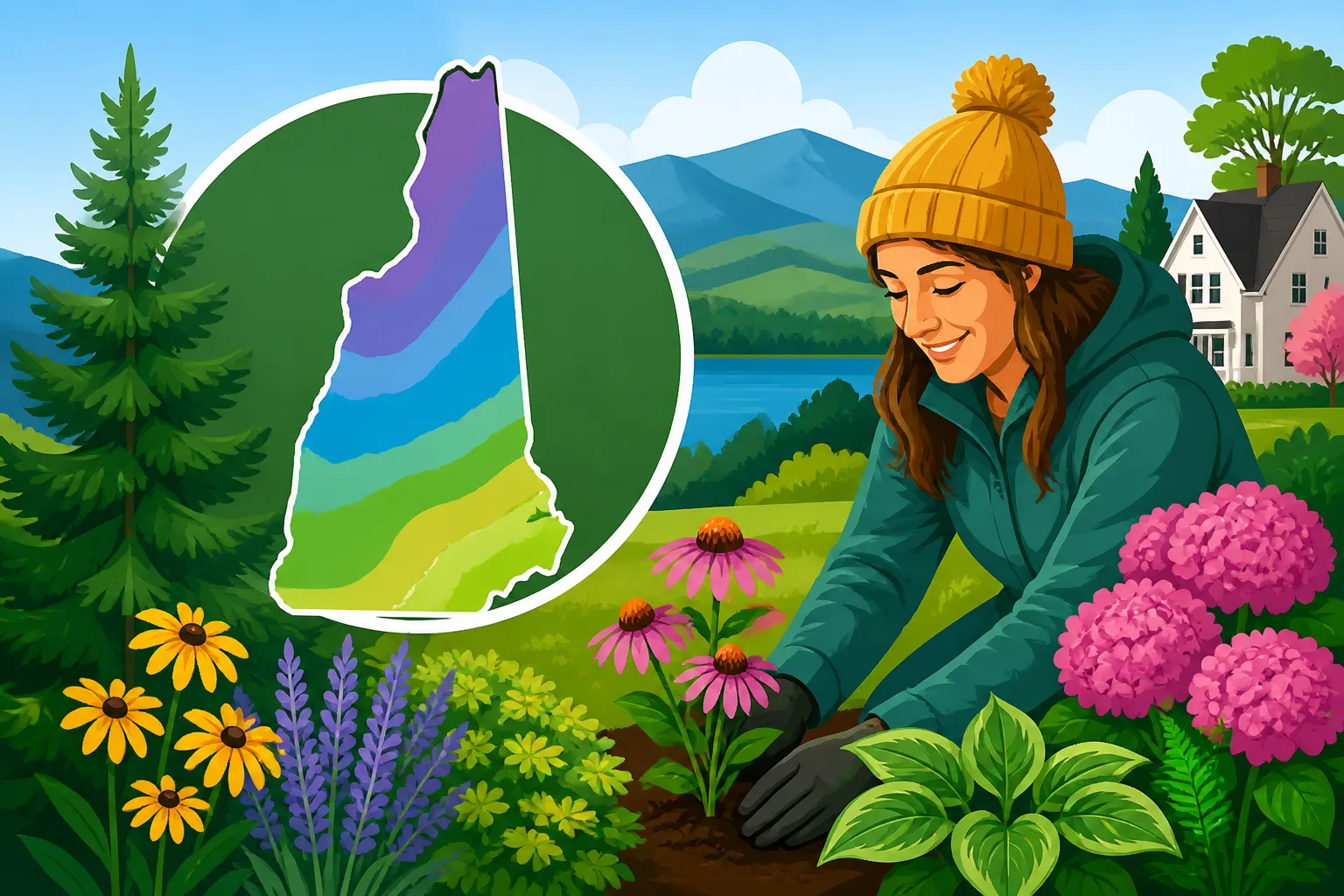
A hardiness zone is a way to think about winter cold when choosing perennial plants. It can help you compare a plant’s cold tolerance with the general conditions where you plan to grow it. For a New Hampshire gardener choosing a shrub, perennial flower, or other plant expected to live through winter, that is useful information—but it answers only one part of the planting question.
According to University of New Hampshire Cooperative Extension, the hardiness map is based on 30-year averages of the lowest annual winter temperatures. University of New Hampshire Cooperative Extension describes the map as providing guidance on what perennial plants will likely survive winter low temperatures in different locations.
The key word is “likely.” A map summarizes past temperature patterns; it does not promise that every winter will match those patterns, or that a plant will survive every set of conditions in a particular garden. A plant that is considered suitable for a mapped area can still struggle if its roots are exposed, the site stays waterlogged, or winter winds dry its foliage. A plant may also do well in a sheltered garden even when a nearby, more exposed spot is a poor fit.
That makes hardiness zones best understood as a screening tool. They can help you decide which plants are worth considering, but they cannot replace checking a plant’s other needs. Before buying, look at the full description: sun exposure, soil drainage, moisture needs, mature size, and any notes about winter protection. A plant’s ability to withstand cold is not the same as its ability to thrive in every New Hampshire yard.
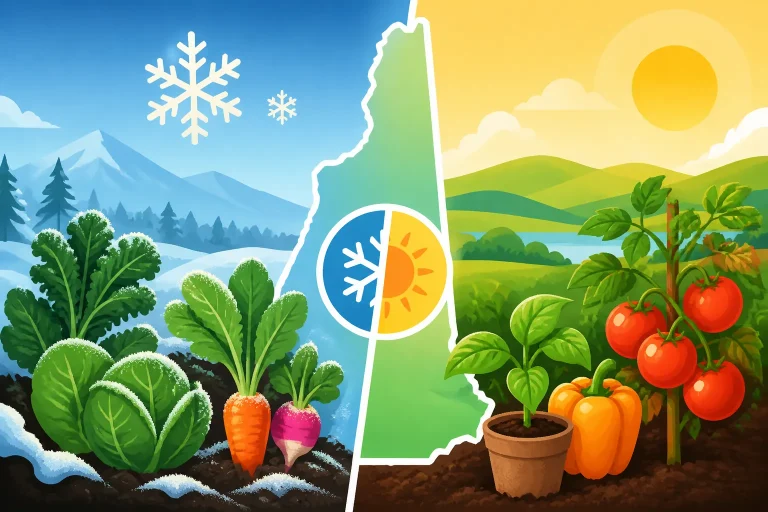
The map also does not tell you when to sow seeds, set out annual flowers, or transplant vegetables. Those choices depend on seasonal conditions and the crop, not just on whether a perennial is likely to survive winter. For timing questions, use a calendar that addresses frost and growing-season conditions, such as New Hampshire Frost Dates and Planting Calendar Guide. For a broader look at how local conditions affect the time available to grow crops, see New Hampshire Growing Season Length and Freeze Risk Guide.
How to use the map for a New Hampshire garden
Start with the area where the plant will actually grow. A map is useful for understanding broad regional patterns, but the yard’s exact conditions can differ from the conditions represented by a nearby weather station or the area around your home. Hills, valleys, slopes, wind exposure, and nearby buildings can all make one planting spot feel different from another.
Use the USDA Plant Hardiness Zone Map to orient yourself, then read plant labels and reliable plant descriptions with that general information in mind. If you are comparing a plant with a stated cold-hardiness range, check whether the description says it is suitable for the area shown on the map. Avoid treating a boundary as a sharp line in the landscape: conditions can change across a relatively small area, and the map is not a guarantee for a specific bed.
A useful approach is to keep a short record of the conditions where you want to plant. Note whether the site is open or sheltered, sunny or shaded, dry or damp, and exposed to wind or protected by a building or trees. Those observations give you practical context when you compare the map with a plant’s requirements. If a label suggests a marginal fit, the site details may help you decide whether to try it in a protected spot or choose a more cold-tolerant alternative.
When checking online map tools, be careful not to treat an address lookup as a site assessment. A location shown on a map is a general reference, not a reading of the soil or temperature at the roots of a plant. The same broad area can contain cold hollows, exposed ridges, and sheltered garden pockets. A map can help establish a starting point, but local conditions determine how useful that starting point is for a particular bed.
If you want a more focused explanation of interpreting the map for a town, Reading the USDA Hardiness Map: Checking Your New Hampshire Town can help you think through that step. For gardeners comparing plant survival across local elevation and terrain, Plant Hardiness Zones Across Northern New Hampshire Elevations addresses why broad regional labels may not capture every yard’s conditions.
Match perennials to more than cold tolerance
Hardiness matters most for plants that are expected to remain outdoors through winter. That includes many perennial flowers, shrubs, and trees. It is less useful as a deciding factor for an annual that completes its life cycle in one growing season, or for a vegetable crop whose success depends mainly on the timing of spring and fall conditions.
Even for perennials, winter survival is only one part of suitability. A plant can tolerate cold and still fail because its roots sit in wet soil, it gets too little light, or it is planted where it cannot reach the moisture it needs. Another plant may tolerate the winter but grow poorly in a location that is too sunny, too shaded, or too exposed.
Think about plant selection as a series of checks:
- Cold tolerance: Is the plant described as suitable for the mapped area?
- Light: Does the spot receive the kind of sun or shade the plant needs?
- Soil and drainage: Will water move through the soil appropriately, or is the site frequently saturated?
- Moisture: Can the plant cope with the site’s usual conditions once established?
- Space: Will the plant have room to reach its mature size without crowding paths, windows, or nearby plants?
- Exposure: Is it likely to face strong wind, reflected heat, or harsh winter conditions?
- Purpose: Is the plant being chosen for flowers, foliage, fruit, screening, or another role?
These checks are especially useful when a plant seems like a close call. Rather than relying on the zone label alone, compare the plant’s needs against the actual site. If the bed is exposed and drains poorly, a plant that is only a tentative cold match may be a risky choice there. A different site—or a plant with better-suited growing requirements—may make more sense.
When the priority is winter survival, distinguish between cold hardiness and winter protection. A plant’s stated cold tolerance does not mean that its roots will be protected from repeated freezing and thawing, that its branches will be safe from wind, or that it will handle waterlogged soil. Those conditions are separate from the average winter-low information represented by a hardiness map.
For more on how cold affects perennial choices, see Perennials and Winter Cold in New Hampshire: Using the Map. If you are selecting plants for a yard with varied sun and moisture conditions, Matching Native Plants to Yard Moisture and Sunlight offers a useful way to put site conditions alongside plant choice.
Account for microclimates and yard conditions
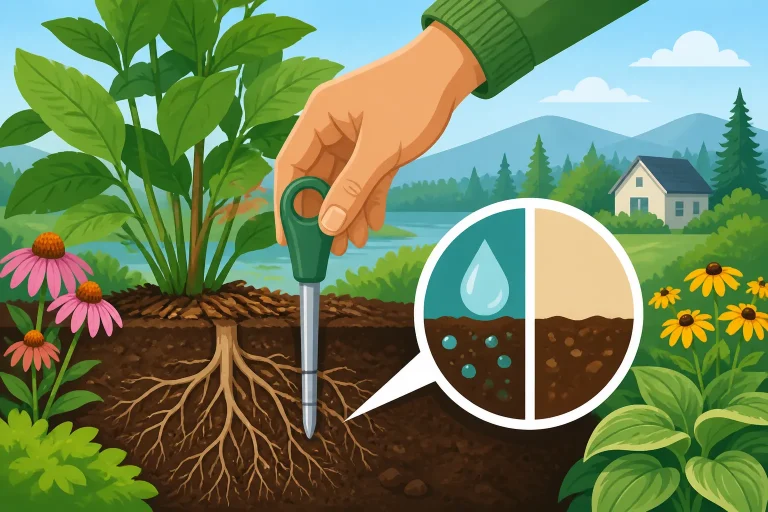
A yard is rarely uniform. A sheltered bed beside a building may experience different wind and exposure from an open lawn. A slope, low area, or spot beside pavement may also have conditions that differ from a nearby garden bed. These small-scale differences are often called microclimates. They can help explain why a plant does well in one part of a property but struggles elsewhere.
A warm, protected location may reduce some of the stresses a plant faces, but it does not erase its needs. A wall can shelter a plant from wind while also reflecting heat. A low spot may collect cold air or hold water. A sunny area may warm sooner but dry more quickly. A wooded edge may offer shelter while creating competition for moisture from established trees. Each feature has potential benefits and drawbacks.
Before planting, observe the intended spot through different weather and seasons. Notice how quickly it dries after rain, whether wind reaches it directly, and whether water tends to collect. Consider whether nearby structures or trees create shade or shelter. These observations are often more useful than assuming that every location in the same town will behave alike.
A simple site comparison can help:
| Site condition | Possible advantage | Possible challenge | What to check |
|---|---|---|---|
| Sheltered bed near a building | Less direct wind exposure | Reflected heat or limited air movement | Sun, heat, drainage, and the plant’s moisture needs |
| Open, windy area | Good air circulation and sunlight | Greater exposure to winter drying and wind | Whether the plant tolerates exposed conditions |
| Low area in the yard | May retain moisture | Can collect cold air or remain wet | Drainage and how the spot behaves after rain |
| Sloping ground | Water may drain more readily | Soil may dry faster or erode | Moisture, stability, and exposure |
| Under or near trees | Shade and shelter may suit some plants | Root competition and reduced light | Available light and moisture at planting depth |
Use this as a prompt for observation rather than a rigid ranking. The same feature can help one plant and hinder another. For example, a damp spot may suit a moisture-loving plant but be a poor choice for one that needs well-drained soil.
If a plant has failed in one location, do not immediately conclude that the zone was wrong. Look for other explanations: poor drainage, transplant stress, unsuitable light, competition from roots, or winter damage linked to exposure. The map is one part of diagnosis, not a record of every factor that affected the plant.
For a closer look at how site exposure shifts planting conditions, see How Garden Exposure Changes Spring Planting and Soil Warmth. The related article Backyard Microclimates: Why Nearby Weather Stations Differ explains why nearby places can experience different conditions.
Use the zone as a filter when choosing plants
A practical way to use hardiness information is to narrow the field before you shop. Start with plants that suit the light, soil, and purpose of the site. Then use their cold-tolerance descriptions to decide which are plausible choices for the area. This sequence prevents the map from overshadowing the conditions that will affect a plant every day.
When comparing candidates, read beyond a single zone label. Plant descriptions may include information about winter protection, drainage, mature size, or the conditions in which a plant performs best. Those details can change your decision. A plant may be a reasonable choice for a sheltered, well-drained bed but less suitable for a wet, windy spot, even when both locations are in the same general mapped area.
Consider also how much risk you are comfortable with. If you want a dependable foundation planting, choose plants described as a strong fit for local conditions and site requirements. If you are experimenting with a plant that may be less reliable, place it where you can monitor it and where a loss would not leave a major gap. A cautious trial can be more sensible than making the whole bed depend on an uncertain choice.
Ask a nursery or plant supplier specific questions rather than asking only whether something is “hardy here.” Useful questions include whether the plant needs particularly sharp drainage, whether it tends to suffer in exposed sites, and whether its winter survival depends on a protected location. The answers can help distinguish a plant that tolerates cold from one that is suited to the growing conditions you have.
Plant labels are also a starting point, not a substitute for checking the plant’s needs. Labels are brief, and they may not describe the range of conditions across a New Hampshire yard. If a label gives only a hardiness reference, look for a fuller description before you commit. If the information is unclear, choose a plant with a better-documented fit or ask a knowledgeable local seller for clarification.
For perennials that need special attention to winter cold, How Hardiness Zones 4a to 6b Dictate Perennial Plant Survival provides more detail on the relationship between mapped hardiness and perennial survival. When choosing a plant for a particular town or garden, remember that a regional reference still needs to be weighed against the conditions of the exact planting spot.
Keep hardiness separate from planting dates
One of the most common mistakes is using a hardiness zone to decide when to plant. The zone is meant to help assess whether perennial plants are likely to withstand winter lows. It does not give a dependable date for planting vegetables, sowing seeds, or moving tender plants outdoors.
Annual crops and frost-sensitive plants need a different kind of planning. Their success depends on the timing of cold weather, soil conditions, the crop’s growing requirements, and how much of the season remains. A perennial may be able to survive winter once established, while a newly planted vegetable may be damaged by spring cold. Those are different questions and need different information.
For vegetables, think in terms of crop needs and seasonal conditions. Cool-season crops and warm-season crops do not share the same planting window. A soil that is workable is not automatically warm enough for every seed, and a mild stretch does not guarantee that frost risk has passed. For date-based planning, use When to Plant Vegetables and Herbs in New Hampshire or When Is It Safe to Plant Outside in Your New Hampshire Town?.
The distinction matters for ornamental gardens, too. Hardiness does not determine when a plant should be installed. Planting conditions, establishment needs, soil moisture, and seasonal weather all matter. A plant that can ultimately survive winter may still be vulnerable if it goes into the ground when it is stressed or unable to establish roots well.
Use the hardiness map to shortlist perennial choices, then use planting-calendar guidance for timing. For spring planting decisions shaped by local frost conditions, Spring Planting Schedules Across New Hampshire Regions provides a separate timing perspective. Keeping these tools separate makes it less likely that a general winter-survival reference will be mistaken for a calendar.
A practical decision process before you plant
A quick, repeatable process can make plant choices more confident without overcomplicating them. It also helps when you are comparing a familiar plant with a less familiar one.
- Decide what the plant needs to do. Choose whether you need a perennial flower, shrub, tree, groundcover, or seasonal crop. Be clear about the role, such as filling a sunny border, adding shade, or creating a screen.
- Assess the planting spot. Observe light, wind, moisture, drainage, and available space. If the area has several conditions, describe the exact part of the bed where the plant will go.
- Check the plant’s full growing requirements. Look beyond a cold-tolerance label. Confirm that its light, soil, moisture, and size requirements fit the site.
- Use the map as a winter filter. Compare the plant’s cold-tolerance information with the map’s general guidance for the area. Treat this as evidence for a decision, not a guarantee.
- Consider how exposed the plant will be. A sheltered bed and an open, windy site may present different challenges. If the fit is uncertain, try a small planting in a suitable location rather than relying on it as the only choice.
- Separate planting timing from winter suitability. For annuals, vegetables, and tender plants, consult guidance that addresses frost and seasonal timing rather than using the hardiness map as a planting date.
- Watch how the plant establishes. After planting, pay attention to watering, drainage, and signs of stress. If it struggles, review the site conditions as well as its cold tolerance before deciding what to change.
This process is useful whether you are planning a new bed or adding a single plant. It can also keep a disappointing result from leading to the wrong conclusion. If a perennial fails, check whether the plant matched the site and whether it received suitable care, not only whether its label appeared compatible with the area.
For a more focused look at the link between winter lows and plant survival, see When USDA Hardiness Zone Shifts Matter for Perennial Survival. If you are also planning a garden around seasonal cold, Deciding When Spring Frost Risk Has Truly Passed for Gardeners addresses a different but related decision: when spring conditions are suitable for planting.
Frequently Asked Questions
Does a matching hardiness zone guarantee a perennial will survive?
No. The map offers guidance about likely winter survival, but a plant’s result also depends on conditions such as drainage, exposure, and how well the site matches its growing needs.
Can I use a hardiness zone to decide when to plant vegetables?
Not on its own. A hardiness map helps assess winter cold tolerance for perennials; vegetable planting dates depend on crop needs and seasonal conditions.
Why might the same plant succeed in one part of a yard and fail in another?
Different spots can vary in wind, sunlight, moisture, drainage, and shelter. Those differences can affect a plant even when both spots are in the same mapped area.
What should I check before buying a perennial?
Check the plant’s cold-tolerance information, then confirm its light, soil, drainage, moisture, and space requirements. Choose based on the planting site as well as the map.
Sources
- University of New Hampshire Cooperative Extension — New 2023 USDA Hardiness Zones Explained | Extension (checked November 15, 2026)
Disclaimer
This article is for general informational purposes only and does not constitute professional advice. Laws, prices and regulations vary by location and change over time. Consult a qualified professional for guidance on your specific situation. New Hampshire Gardening Guide is not a government agency and is not affiliated with any university extension, state department of agriculture or other government agency.